

When Swift’s speaker sings in ‘cardigan’ that the object of the song ‘tried to change the ending, Peter losing Wendy’, she encourages us to go back and take a closer look at a story that may have been a staple of our childhoods. The line is deeply ambiguous, and has always puzzled me. It’s unclear whether he tried to change the (happy) ending, making it so that Peter instead lost Wendy; whether he tried and failed to change the (unhappy) ending of Peter losing Wendy; whether he tried to change the (unhappy) ending, but Peter lost Wendy anyway. Is Peter losing Wendy the result of his actions, or the fate he tried to change? [Click above image to read on.]
Tag: Taylor Swift

Coming Soon: My First Taylor Swift Book!
Straight from the tortured poets department, I am absolutely ecstatic to announce something out of my Wildest Dreams: my first TAYLOR SWIFT BOOK will be published in January! It's a collection of 46 songs - from Debut to TTPD - with annotated lyrics and accompanying literary analysis, taking a super deep dive into the poetic… Continue reading Coming Soon: My First Taylor Swift Book!
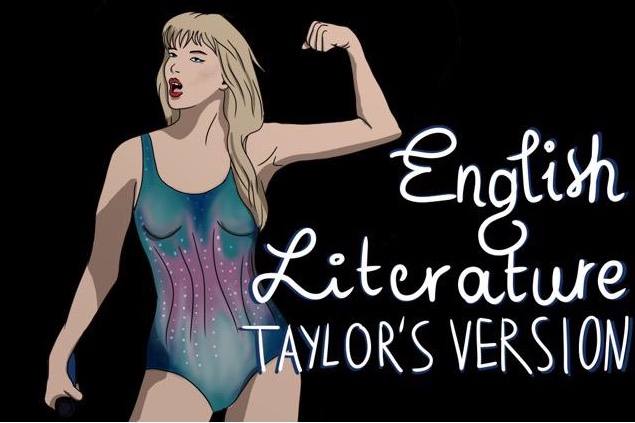
What’s it like to study English Literature (Taylor’s Version)?
For an answer to that question, please enjoy this incredible graphic novel by two of my ridiculously talented students! Thank you Chiara and Anaya. Click above image to read more!
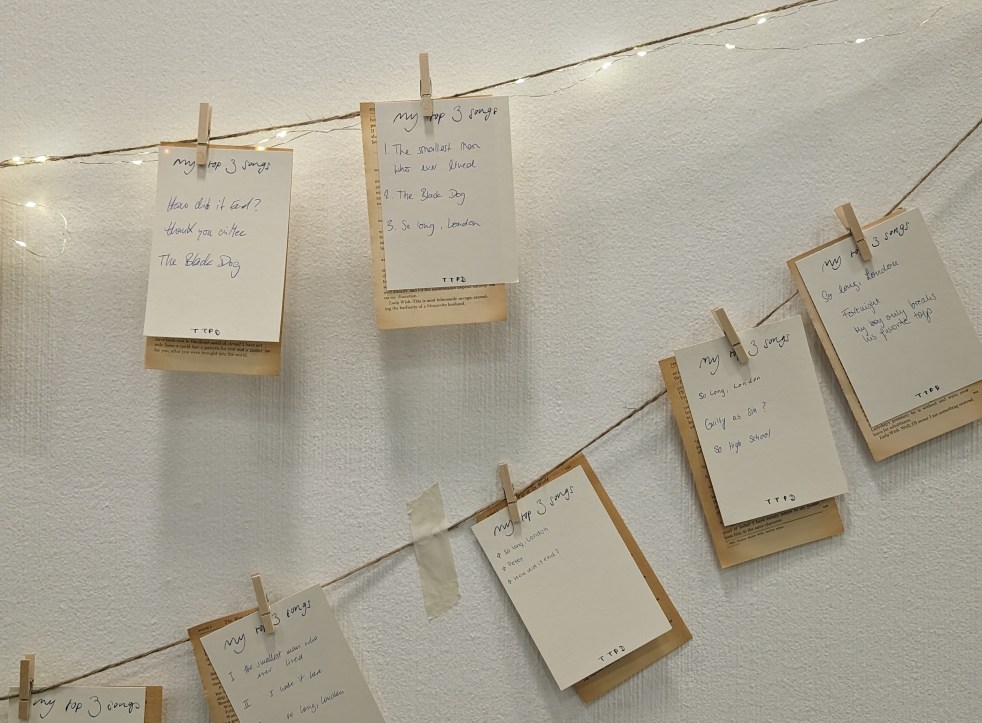
The Tortured Poets Department: a Curated Reading List, Song by Song
To cater to popular demand (two people asked me after a talk), I present to you a Taylored reading list inspired by every single song on The Tortured Poets Department, 'The Anthology'. Yes, you can find TTPD-inspired reading lists elsewhere (I like this one, from the Rogers Public Library in Arkansas), but I've tried to go beyond the obvious (Dylan Thomas) and select appropriate reading recommendations for each song, plus a general list based simply on vibes (e.g. Dark Academia), which you can find at the bottom. I'll keep this updated as I think of more recommendations, and please do add your own recs in the comments!
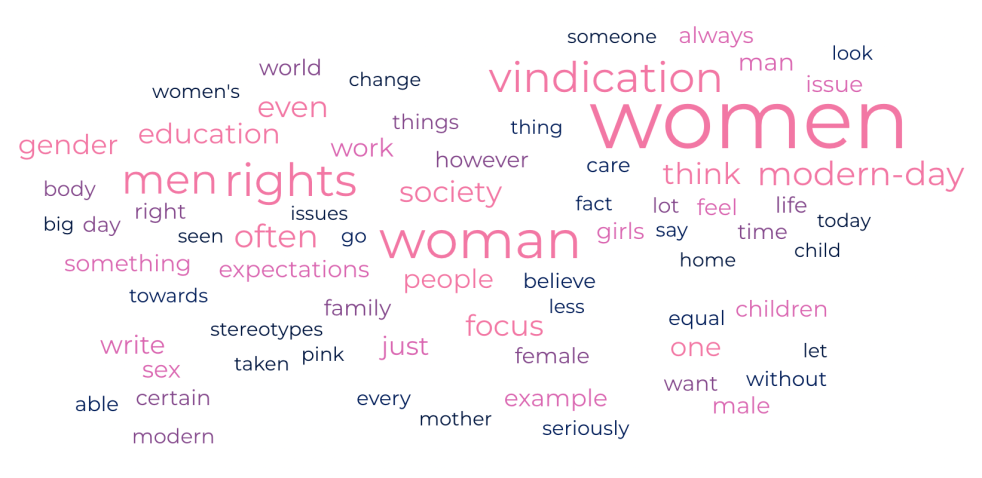
Why do we need feminism? Thoughts from English Literature (Taylor’s Version)
As part of our session on feminism, writing and power, we looked at Mary Wollstonecraft's seminal 'Vindication of the Rights of Woman', a 1792 treatise that argued for the importance of women's education during a period where it was habitually denied. Expected to be little more than delicate parlour ornaments, women were not seen as worthy recipients of the kind of education offered to men - a state of affairs which Wollstonecraft laments, while pointing out its idiocy (surely men would prefer a wife with whom they can hold a conversation). As a thought experiment, I asked my students: 'If you could write a modern-day "Vindication of the Rights of Woman", what feminist - or gender-related - issue would you focus on, and why?' Here are some of the responses - you can also see a word cloud of the most frequently used terms above. Click on it to read more.

English Literature (Taylor’s Version): Seminar 9
I had been looking forward to teaching this class for months. In some ways, it's the class that started it all: my concrete idea for English Literature (Taylor's Version) took shape when listening to 'The Great War' for the first time back in 2022, and noticing parallels with Sylvia Plath's poem 'Daddy' (you can read more about that here). It eventually grew into something bigger: a seminar that paired trauma studies with discussion of art as therapy, the connections between literature, love and war, and close reading of Geoffrey Chaucer's Troilus and Criseyde, John Donne's 'Love's War' and, of course, Plath's 'Daddy'. We also discussed Holocaust literature, the disturbing trend for '...of Auschwitz' titles in modern publishing, and what it means to use art to talk about trauma. It was, perhaps, the most meaningful seminar of all those I've taught, and sparked perhaps the most important conversations. [Click above image to read more]

Argylle and the Author function
The end of this month will see the release of the film Argylle, directed and produced by Matthew Vaughn. It’s a spy thriller based on a debut novel by American author Elly Conway. So far, so normal. However, when you find out that the film rights were purchased by Apple in 2021 for $200 million, years before the novel was even released, and that there are no pictures of, or interviews with, Elly Conway available online, despite her instagram account having over 40,000 followers, things start to look a little strange. As anyone who knows anything about publishing will tell you, Apple do not pay millions of dollars for the film rights to as-yet-unpublished debut novels by nobodies, and if you want to publish any book these days, good luck to you if you’re not willing to take every chance for self-promotion that you can, including plastering your face all over social media. Who the hell, then, is Elly Conway?

Speak now? Aviation, activism and accountability
The other day, I received an email. It went straight into the special folder of my inbox where any emails containing the keyword ‘Swift’ are automatically programmed to go; this is my desperate attempt to try and maintain some compartmentalisation of my professional life, since I do actually also have to maintain a normal full-time workload on top of repeatedly telling the media why All Too Well (10 minute version) is a masterpiece (which, don’t get me wrong, I love to do, because it is).

English Literature (Taylor’s Version): Seminar 6
[By Paulien Vercruysse] In seminar 6 of English Literature (Taylor’s Version), we focused on Romanticism, nature and ecocriticism, alongside Taylor Swift’s music. No less than five songs were on the agenda for this week and not one of them was unwelcome. The songs that we put under the microscope were ‘New Romantics’, ‘Out of the Woods’, ‘The Lakes’, ‘Ivy’ and ‘Willow’. The seminar was kicked off with a discussion of the songs. We tried to uncover what they were about, what role nature plays in them, and what striking images and oppositions we stumbled upon. [Click above image for more]
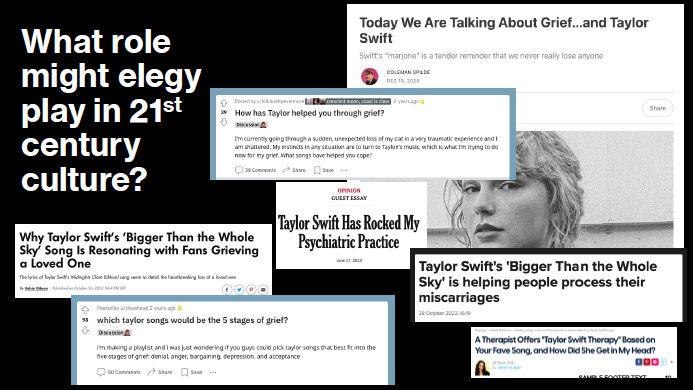
English Literature (Taylor’s Version): Seminar 5
In seminar 5, we explored the relationship between Swift's music ('Soon You'll Get Better'; 'Ronan'; 'Marjorie'; 'You're Losing Me'; 'Bigger Than the Whole Sky') and elegy, a capacious term that usually connotes a song or poem about death or bereavement, the tradition for which originated in ancient Greece. We looked at three very different examples of elegies: the anonymous 'The Wanderer', from the tenth century (originally written in Old English); Thomas Gray's 'Elegy Written in a Country Churchyard' from the eighteenth century; and Christina Rossetti's 'A Dirge' (nineteenth century). Focusing on these poems, we explored the relationship between language, memory and emotion. Later, we asked what role elegy might play in twenty-first-century culture, and looked at some of the fan responses to Swift's elegies, speculating that these might help to remove some of the taboos surrounding grief, death and bereavement and enable people to articulate their emotions in a cathartic and restorative way. [Click above image for notes]
 Swifterature