

Now that the glitter has settled on The Life of a Showgirl’s release, and I’ve spent enough time on Reddit fan forums and the comments section of Instagram to feel that I’ve gained both a comprehensive overview of audience reactions and a deep, visceral need to go outside and touch some grass, I wanted to… Continue reading Is it ‘Actually Romantic’ to renounce one’s feminism?
Category: Essay

The peak before the prison house: Swift, Wordsworth, and the Romantic child
Taylor Swift opens ‘the lakes’, a bonus track from her 2020 album folklore, with the line ‘is it romantic’, and then goes on to pun about William Wordsworth and allude to the British Romantic poets, who were known for being inspired by the Lake District. However, it’s not actually Swift’s most Romantic song — not… Continue reading The peak before the prison house: Swift, Wordsworth, and the Romantic child

Taylor Swift: The New Romantic Poet
In this essay by high school student Anthony Daans (who kindly allowed me to give some feedback on his project), he argues for Taylor Swift as a modern Romantic poet, while also exploring some of the ways in which this persona might stand at odds with other aspects of Swift's career. Thank you so much,… Continue reading Taylor Swift: The New Romantic Poet

What about Wendy? Adaptation, interrogation, and turning on the light
When Swift’s speaker sings in ‘cardigan’ that the object of the song ‘tried to change the ending, Peter losing Wendy’, she encourages us to go back and take a closer look at a story that may have been a staple of our childhoods. The line is deeply ambiguous, and has always puzzled me. It’s unclear whether he tried to change the (happy) ending, making it so that Peter instead lost Wendy; whether he tried and failed to change the (unhappy) ending of Peter losing Wendy; whether he tried to change the (unhappy) ending, but Peter lost Wendy anyway. Is Peter losing Wendy the result of his actions, or the fate he tried to change? [Click above image to read on.]
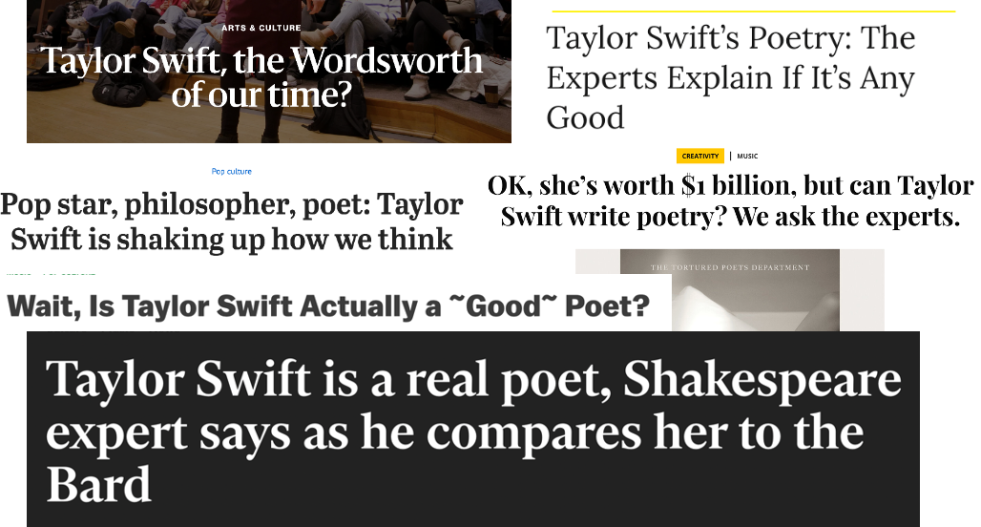
Is Taylor Swift a poet? Yes. Is that the wrong question to ask? Also yes
With less than 24 hours to go before perhaps the biggest release in music history - Taylor Swift's hotly-anticipated eleventh album, The Tortured Poets Department, already downloaded over 200 million times after being leaked the day before the official launch - the requests have started to roll into my inbox from journalists, all asking a variation on the same question: does this mean that Taylor Swift is, like...a poet? An actual...poet? [Click above image to read more]

Argylle and the Author function
The end of this month will see the release of the film Argylle, directed and produced by Matthew Vaughn. It’s a spy thriller based on a debut novel by American author Elly Conway. So far, so normal. However, when you find out that the film rights were purchased by Apple in 2021 for $200 million, years before the novel was even released, and that there are no pictures of, or interviews with, Elly Conway available online, despite her instagram account having over 40,000 followers, things start to look a little strange. As anyone who knows anything about publishing will tell you, Apple do not pay millions of dollars for the film rights to as-yet-unpublished debut novels by nobodies, and if you want to publish any book these days, good luck to you if you’re not willing to take every chance for self-promotion that you can, including plastering your face all over social media. Who the hell, then, is Elly Conway?

Speak now? Aviation, activism and accountability
The other day, I received an email. It went straight into the special folder of my inbox where any emails containing the keyword ‘Swift’ are automatically programmed to go; this is my desperate attempt to try and maintain some compartmentalisation of my professional life, since I do actually also have to maintain a normal full-time workload on top of repeatedly telling the media why All Too Well (10 minute version) is a masterpiece (which, don’t get me wrong, I love to do, because it is).
Baited hooks and silly books: why Taylor Swift is the new Gothic novel
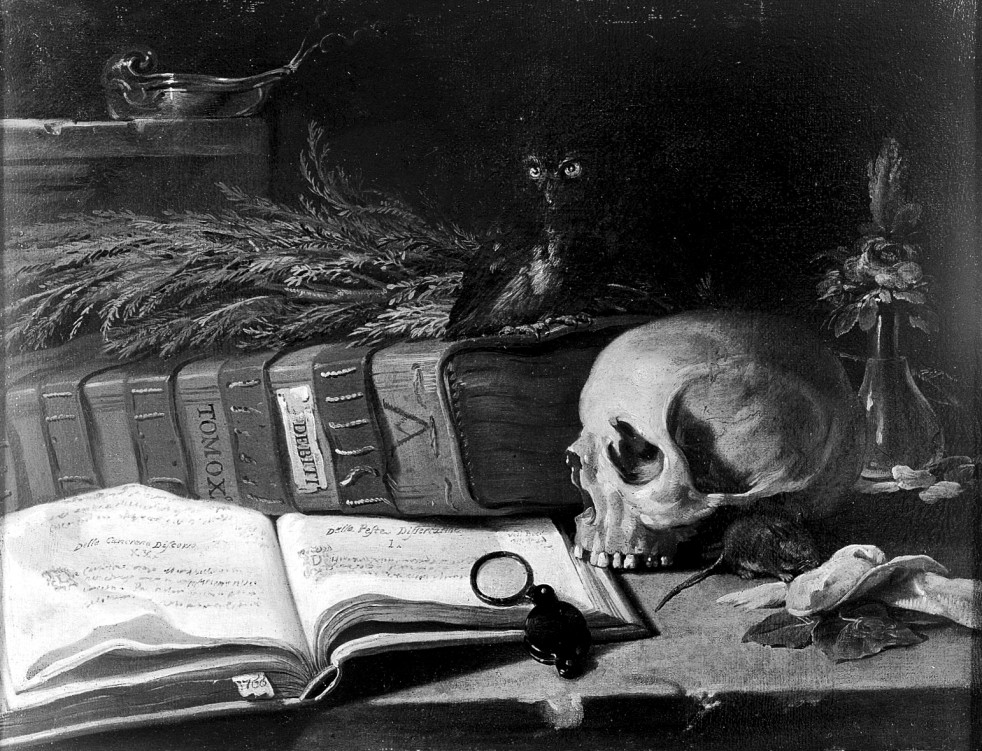
‘Too many young women yearn for annihilation’, reads the clickbaity subtitle of Mary Harrington’s article ‘The Dark Truth about Taylor Swift’. Published on 16 August 2023, Harrington’s piece observes a troubling tendency in young women towards ‘a craving for romantic transcendence that’s difficult to distinguish from self-destruction’: in other words, an obsession with, and yearning for, love affairs made all the more intense by the knowledge that they are doomed to failure (such as Jack and Rose from Titanic, or Romeo and Juliet). Harrington attributes some of Swift’s popularity to the fact that her oeuvre satisfies this desire: her best songs are about romantic liaisons that don’t end well (‘got a history of stories ending sadly’). Harrington then goes on to link this to thirteenth-century France and the massacre of the Cathar sect of Christianity, who saw our incarnated world as fundamentally evil and longed to escape the ‘prison’ of flesh to return to unity with God. Following their persecution during the Albigensian Crusade, the Cathars’ beliefs went underground and spawned what we now know as ‘courtly love’ literature.

I Don’t Like Your Kingdom Keys: Literature, Gatekeeping, and the Classroom as Kindergarten
Well, this escalated. One minute I’m typing idle thoughts into a sticky note on my laptop about all the ways in which we might connect Taylor Swift songs with literature (and positing frivolous titles for such a course, like ‘Now I’ve Read All of the Books Beside Your Bed’); the next, I’m setting alarms for 3.30, 4.30, 5.30 and 7am so I can talk about this initiative to Dubai, Germany, Austria, Belgium, the US and Ireland, or rushing around trying to find a quiet corner in the middle of an American university campus where I can chat live to BBC News. Following segments on the Ukraine war and the Iran hijab protests with my chirpy musings on Swift (not Jonathan) and literature is one of the more surreal things I’ve done in my career.

Help, I’m still at Satis House: reclaiming female stasis
Everybody moved on/I, I stayed there/Dust collected on my pinned-up hair In Chapter 8 of Charles Dickens’s classic novel Great Expectations (1861), the anxious young Pip is led by his playmate Estella to meet the mysterious Miss Havisham at her home, Satis House. Upon entering, Pip finds himself ‘in a pretty large room, well lighted… Continue reading Help, I’m still at Satis House: reclaiming female stasis
 Swifterature