
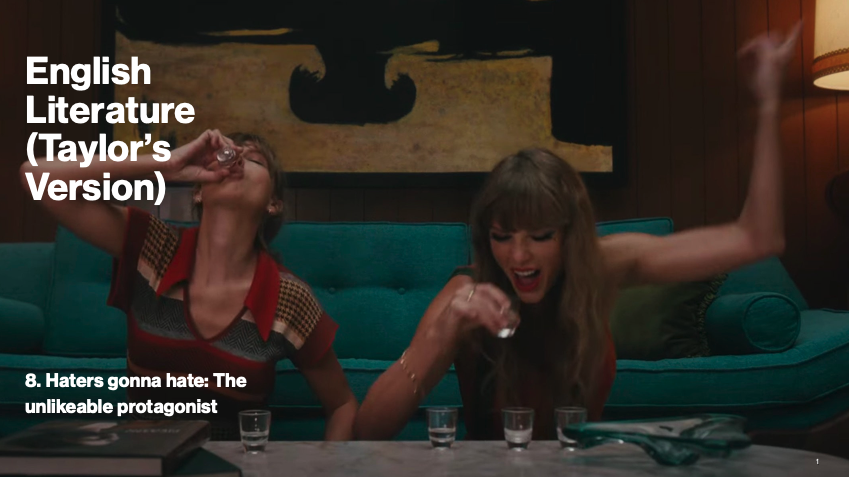
In Seminar 8 of English Literature (Taylor’s Version), titled ‘Haters Gonna Hate: The Unlikeable Protagonist’, we looked at the antihero, or deliberately unlikeable protagonist, in literature and culture. We tried to answer the question: what does it mean for Swift to self-identify as an antihero, in the twenty-first century? In order to do this, we looked at groundbreaking incarnations of the antihero in William Makepeace Thackeray’s Vanity Fair (1848) – subtitled ‘A novel without a hero’ – and Charlotte Bronte’s Villette (1853). There was a strong feminist slant to this seminar: these novels feature female protagonists who deliberately subvert the gendered expectations of their era, refusing to conform to social and sexual norms and even problematising their relationship with the reader him- or herself, through the mechanism of unreliable narration (Brontë’s Lucy Snowe, for example, is a notoriously slippery and untrustworthy narrator), a trope we also witness in Swift’s song ‘Dear Reader’. The seminar explored how a literary antihero can serve as a form of sociopolitical protest and societal interrogation.
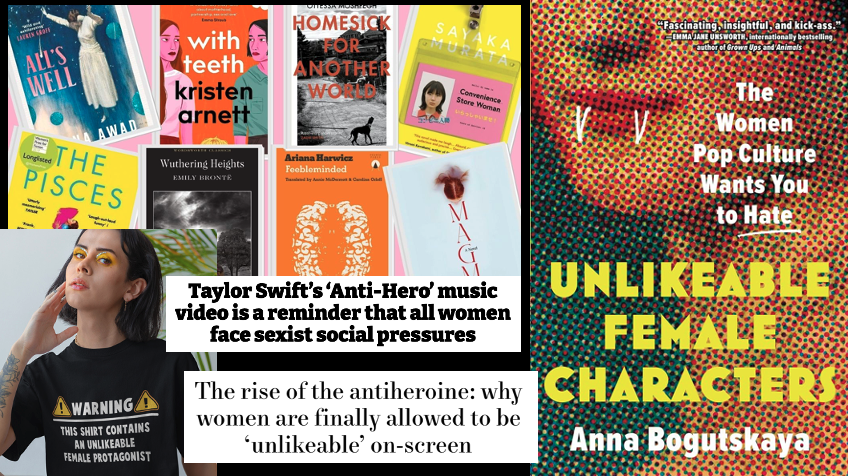
The unlikeable protagonist is a useful framework through which to examine Swift, whose songs ‘Mad Woman’, ‘Shake it Off’, ‘Vigilante Shit’ and ‘Slut!’ deliberately cast her as an unlikeable protagonist while simultaneously questioning the very notion of likeability, its subjectivity, and the problematic power dynamics bound up with who gets to decide. Such themes are also prominent in songs such as ‘The Archer’ and ‘Look What You Made Me Do’, which locate an element of empowerment in one’s deliberate self-placement as an outsider.
For more detailed notes, see below – thank you Kato!

 Swifterature
5 thoughts on “English Literature (Taylor’s Version): Seminar 8”