

by Paulien Vercruysse
In seminar 6 of English Literature (Taylor’s Version), we focused on Romanticism, nature and ecocriticism, alongside Taylor Swift’s music. No less than five songs were on the agenda for this week and not one of them was unwelcome. The songs that we put under the microscope were ‘New Romantics’, ‘Out of the Woods’, ‘The Lakes’, ‘Ivy’ and ‘Willow’.
The seminar was kicked off with a discussion of the songs. We tried to uncover what they were about, what role nature plays in them, and what striking images and oppositions we stumbled upon.
After this discussion, we tried to answer the question of whether Taylor is ‘singing us back to nature’. Shortly put, the answer is ‘yes’. To answer this question, we got help from a New York Times opinion piece by Jeff Opperman, and we quickly learned that Taylor, in comparison to work by other artists, incorporates words inspired by nature seven times more frequently in her songs. Especially her sister albums, folklore and evermore, are heavily influenced by natural elements, which we were able to see for ourselves in the songs ‘The Lakes’, ‘Ivy’ and ‘Willow’. By using subtle imagery relating to nature in her songs and music videos, she shares a positive attitude towards it and takes a first step to help us return to it. The more we hear about nature, the more we will connect and relate to it in real life.
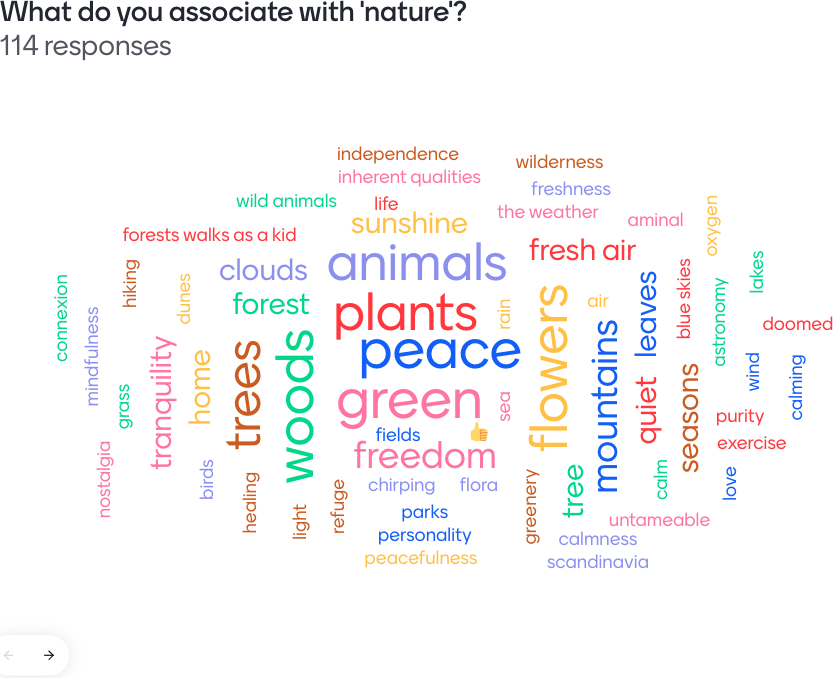
Next, we had a try at explaining nature in our own words and what things we relate to it. As it turns out, defining ‘nature’ is a very complicated given and not as easy as it seems! Even the Oxford English Dictionary has 34 different explanations for the word. That’s where we also explored to what extent each of us suffers from plant blindness, which is the tendency to disregard plants in the environment. It was quickly discovered that we all suffer from a little plant blindness.
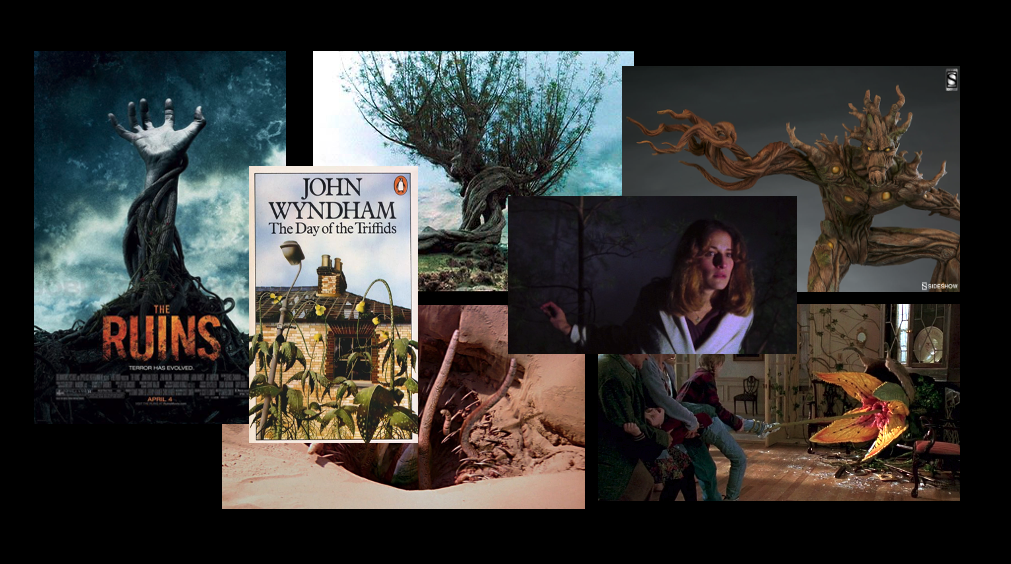
This is where one of the main points of the seminar came into the picture – Ecocriticism. Ecocritics want to determine how literature engages with nature, its destruction and how humanity and the biosphere interact with one another. However, ecocriticism is a broad field of expertise, and several trends exist within in it. To make this more tangible, we looked at Taylor’s music videos for ‘Out of the Woods’ and ‘Willow’, and how nature is portrayed in them. Together, we tried to find some other examples in cinematography and pop culture where nature plays a significant role as well. Some examples that came to mind were Harry Potter, Jumanji, Disney and Lord of the Rings. Interestingly, nature is often portrayed as either hostile or unhostile. The thought of nature being hostile offered us a pathway to shortly discuss a genre called ‘plant horror’, which lead to the phenomenon of ‘ecophobia’.
Lastly, we tried to figure out what the connection between Romanticism, nature and emotion is, and we were accompanied by Wordsworth’s preface to the ‘Lyrical Ballads’ to do so. One conclusion we made is that nature and emotion are connected by a sense of rawness. Nature just is: it is wild and unrefined, we can’t control it. Emotion is something we also can’t really control; it also just is. Both are raw and should be left to run freely. Romanticism and poetry are about that spontaneous flow of emotions, when you feel something you write it down. We learned that lots of the ideas we link to inspiration and creativity today, has roots in the Romantic period, thanks to Wordsworth.
For more detailed information and explanations, feel free to consult the notes below.

 Swifterature
Love this! Is the presentation (photo from above) available for viewing?